
As programmatic DOOH evolves, real-time bidding is becoming part of how inventory is bought and activated across digital screens. But while the concept borrows from traditional programmatic models, the way auctions function in physical environments introduces important differences that shape how campaigns are executed and valued.
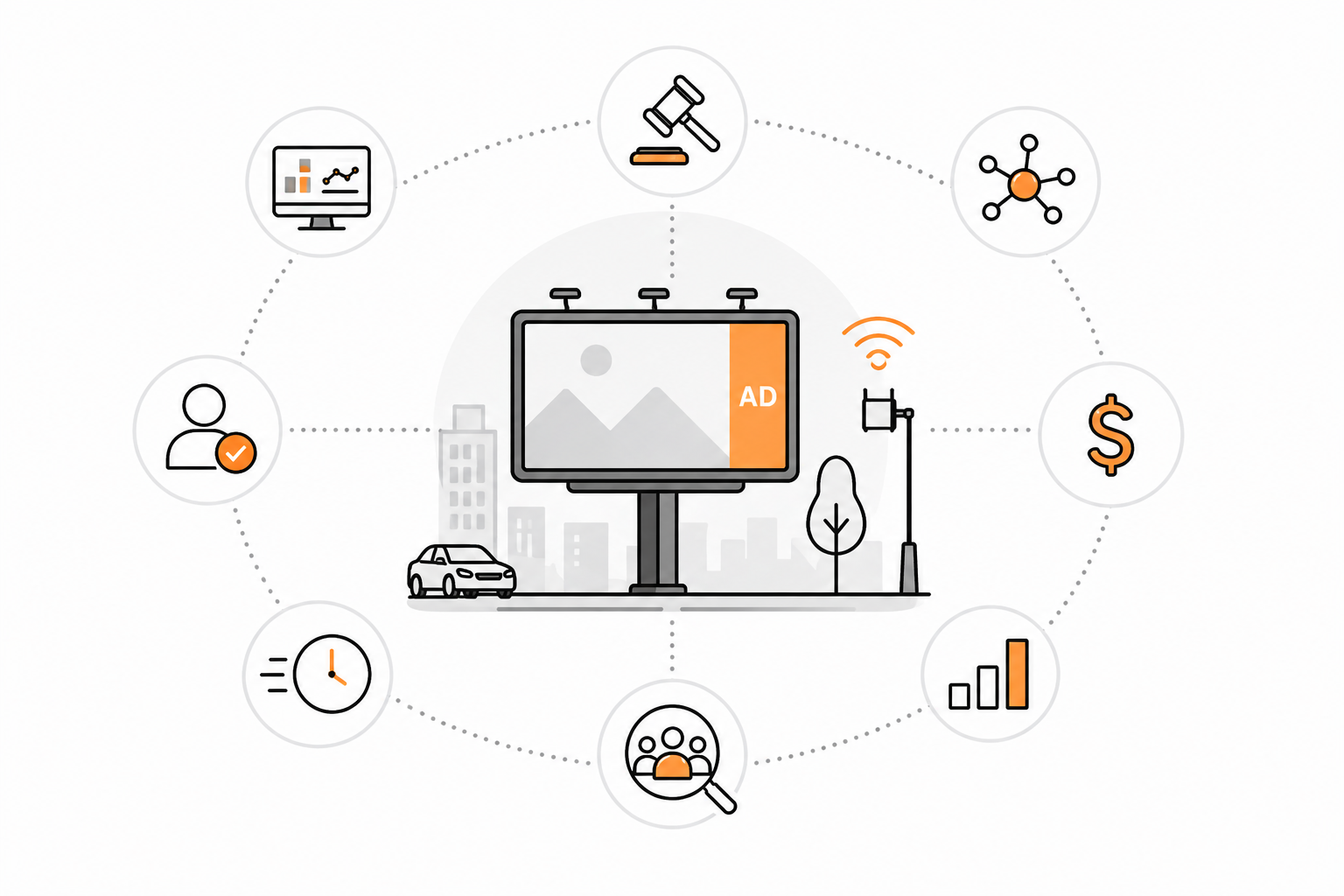
When people hear real-time bidding in DOOH, they often imagine it works exactly like display advertising, just on a billboard.
Not quite.
The auction logic is similar, but the environment is very different. In display, you are usually dealing with a single user, a single device, and a very immediate ad call. In DOOH, you are dealing with shared screens in physical spaces, scheduled loops, venue rules, and audience estimation rather than one-to-one identity.
So yes, DOOH auctions can happen in real time, but “real time” here means live decisioning for physical media, not a copy-paste of web ad serving.
How the auction works
At a high level, the flow is simple. A digital screen has an available slot. That opportunity is exposed programmatically through an SSP or exchange. A DSP evaluates whether that slot matches the advertiser’s targeting and budget rules. If it does, the buyer bids or activates against it. The winning ad is then scheduled into the screen loop.
The exact transaction can happen through open auction, private marketplace, or another programmatic deal type. But the core idea stays the same: the system decides, in a live environment, which ad should run and when.
The easiest analogy is this: it is less like serving a banner to a browser and more like assigning the next song in a playlist based on who is willing to pay for that moment.
What makes DOOH auctions different
The biggest difference is context.
DOOH auctions are shaped by things like location, time of day, venue type, footfall patterns, weather, and screen format. Buyers are not evaluating a logged-in user in the same way they might in mobile or display. They are evaluating the value of a moment in a place.
That changes how inventory is priced and how campaigns are planned. It also means measurement is often modeled rather than user-level deterministic.
Final take
DOOH auctions work in real time by matching available screen inventory with live campaign demand through programmatic systems.
The logic is digital, but the medium is physical.
That is what makes it powerful, and what makes it different.