
Out-of-home advertising is evolving as digital formats expand what’s possible in physical spaces, creating a clear divide between traditional and screen-based media. While both operate in the same environments, their capabilities, flexibility, and how they’re bought and measured differ significantly.
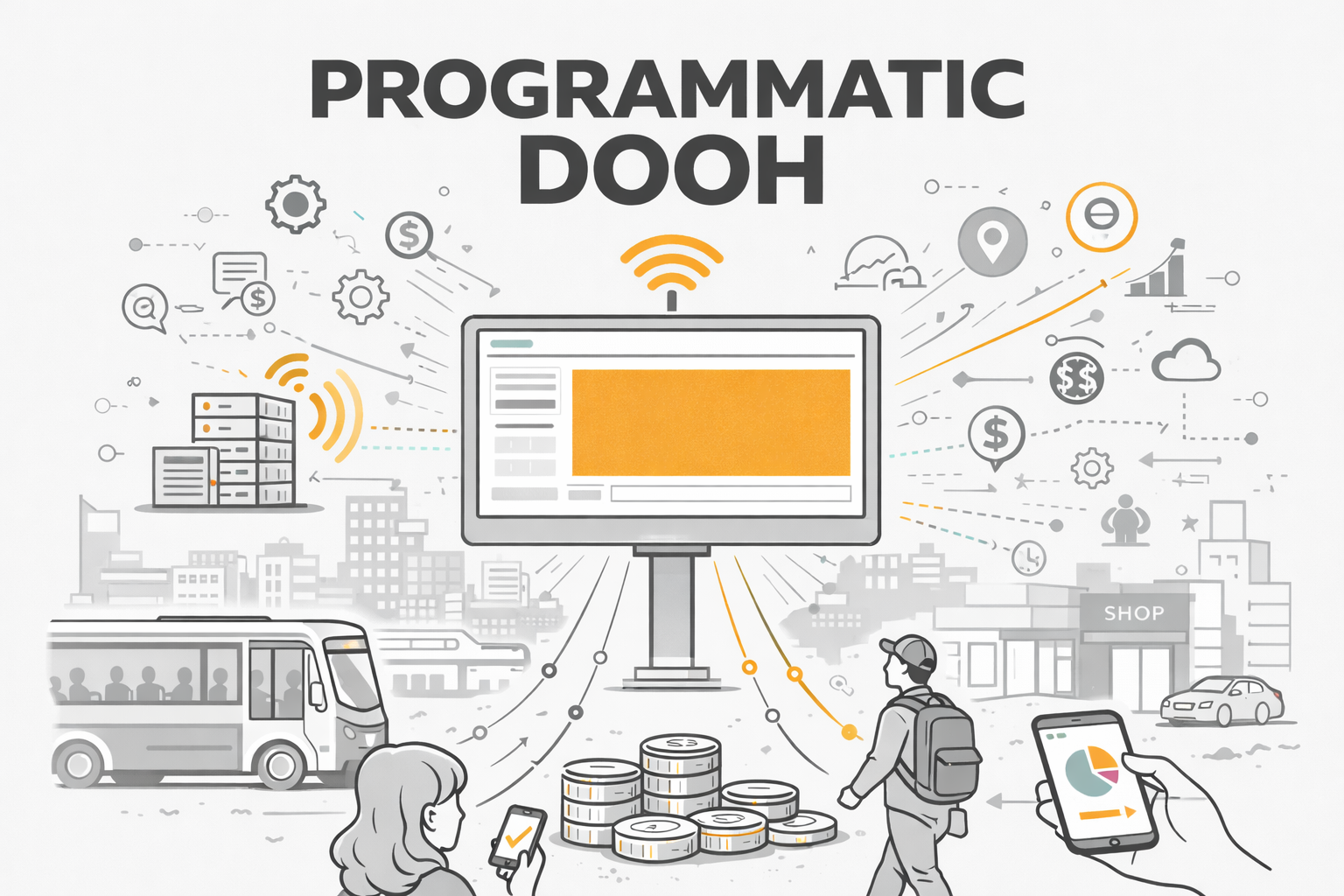
The difference between OOH and DOOH is simple once you strip away the jargon.
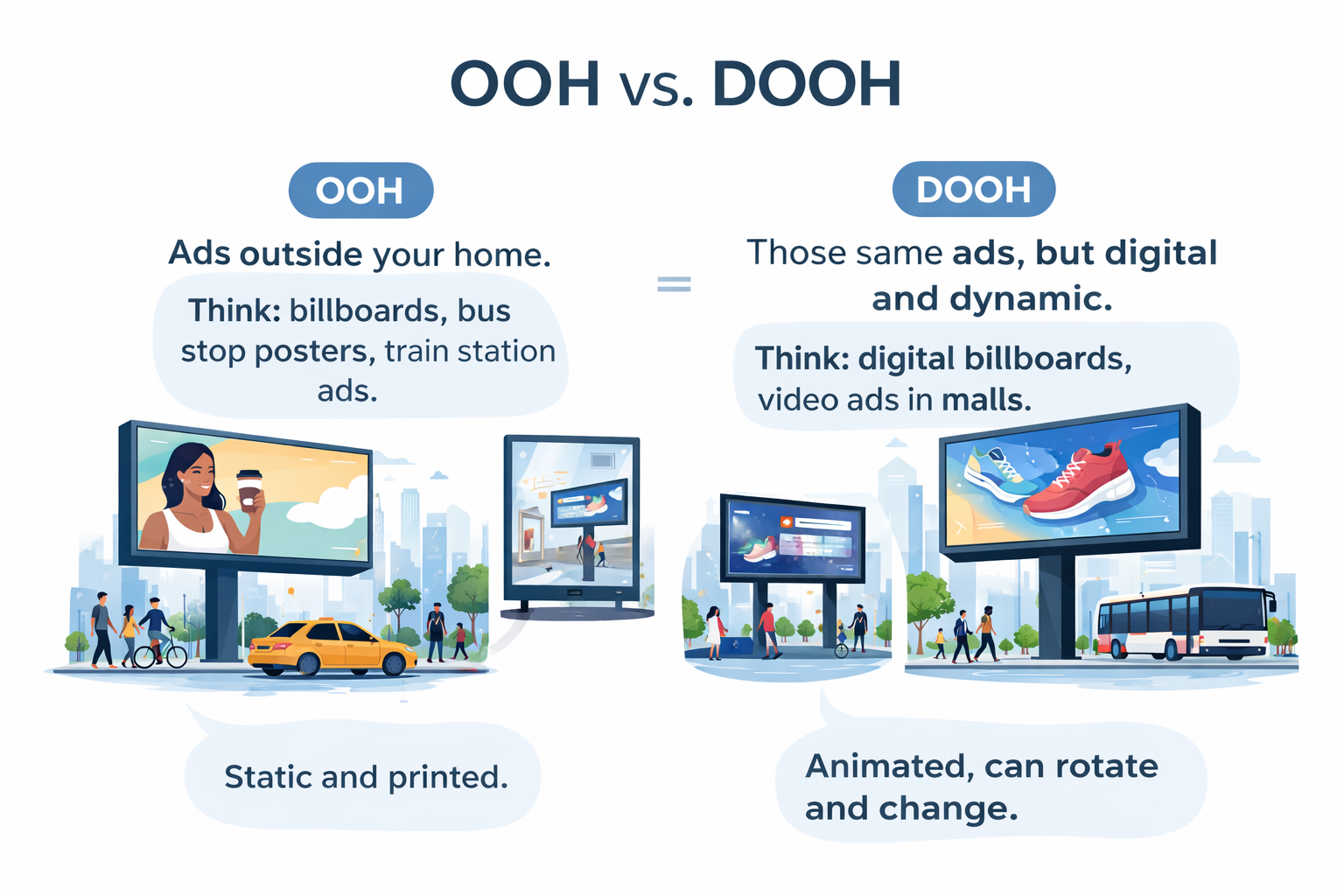
OOH is any ad you see when you’re out in the real world: like billboards, bus stop posters, or ads in train stations. They’re usually printed and don’t change.
DOOH is the same idea, but on screens: like digital billboards or video ads in malls. These can move, update, or rotate different ads.
So all DOOH is OOH, but not all OOH is DOOH.
What counts as OOH:
Traditional OOH includes things like:
• static billboards
• bus shelter posters
• transit station panels
• street furniture ads
• printed signs in public spaces
It is location-based media, but not necessarily digital or dynamically managed.
What makes DOOH different
DOOH uses digital screens instead of printed placements. That opens the door to more flexible creative, easier campaign updates, and programmatic buying options.
Examples include:
• digital billboards
• retail video screens
• airport displays
• transit digital panels
• venue-based digital networks
The easiest analogy is this: OOH is the poster on the wall; DOOH is the screen that can change the message depending on the moment.
That difference matters because once the screen becomes digital, the buying and measurement possibilities change too.
Why the distinction matters
For advertisers, DOOH offers more flexibility than traditional OOH. Campaigns can be updated faster, scheduled by time or location, and connected to data signals in a way static formats cannot.
For media owners, it creates a bridge between physical inventory and digital buying systems.
But it is still important not to collapse the two into one category. Traditional OOH and DOOH may live in the same family, but they behave very differently from a planning, buying, and monetization perspective.
Final take
OOH is the broad category.
DOOH is the digital, more dynamic branch of it.
Same world, different infrastructure.
And once the screen becomes digital, the media starts behaving less like a poster and more like a programmable surface.