
As digital infrastructure continues to reshape traditional channels, outdoor advertising is becoming more flexible, accessible, and data-driven. Programmatic DOOH sits at the center of that shift, changing not the screens themselves, but how inventory is bought, sold, and activated across real-world environments.
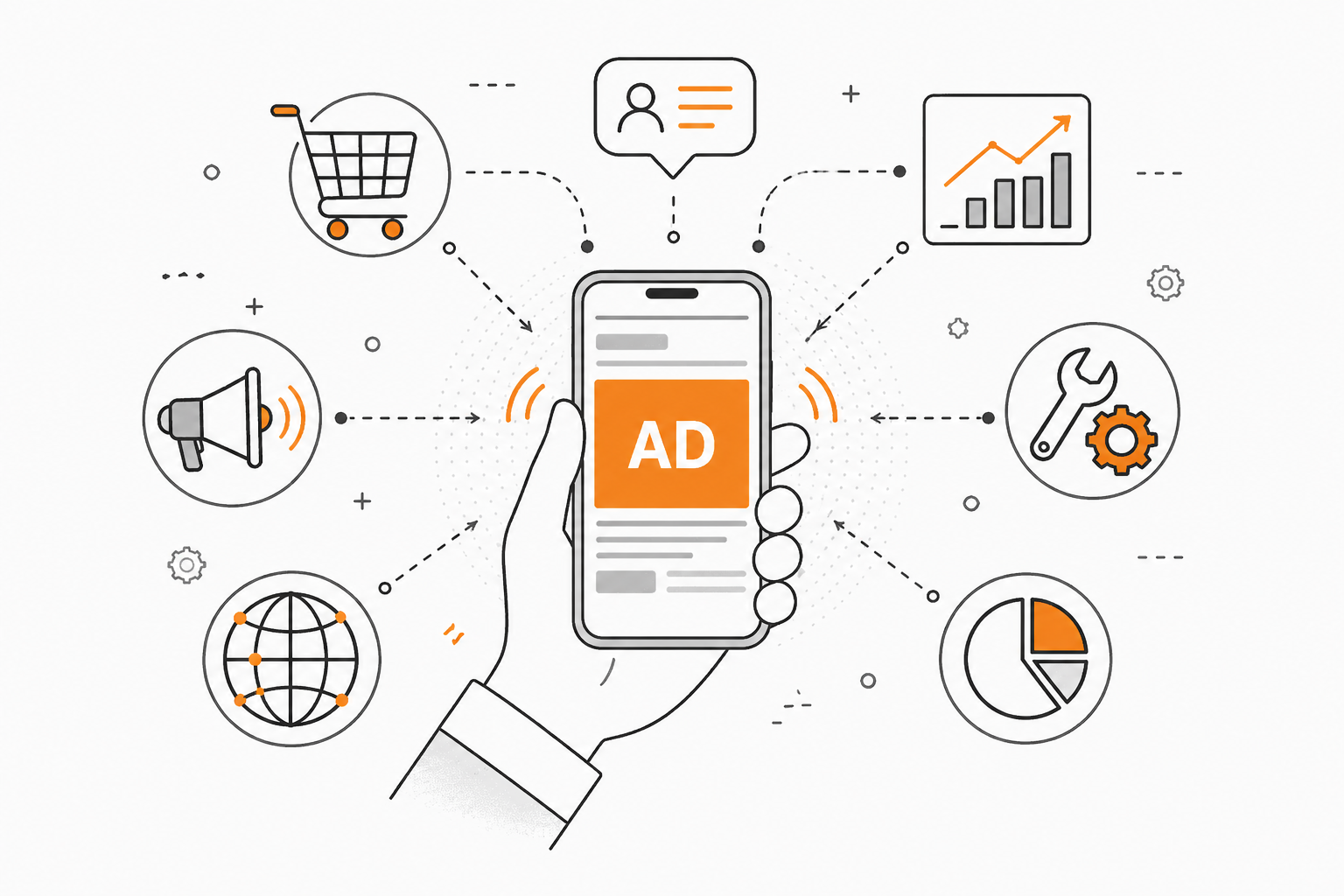
Programmatic DOOH sounds more complicated than it really is.
At its core, it is just a smarter way of buying and selling digital outdoor advertising. Instead of manually booking every screen, campaign, and time slot, advertisers can use software to access inventory across digital billboards, transit screens, retail displays, and other public-facing environments.
Think of it as moving outdoor advertising from a manual reservation desk to a live trading system.
The screens are still physical. The buying process is what changes.
What programmatic DOOH actually means
Programmatic DOOH stands for programmatic digital out-of-home advertising.
It refers to the automated buying, selling, and delivery of ads on digital screens in real-world locations. These can include:
• roadside billboards
• airport screens
• shopping mall displays
• transit hubs
• gyms, offices, and retail environments
The important thing to understand is that programmatic DOOH does not mean every screen is sold in a fully open, real-time auction. Sometimes it is. Often, it is a mix of automation, private deals, curated supply, and rules-based delivery.
So “programmatic” here really means software-driven transaction and decisioning, not just open-market bidding.
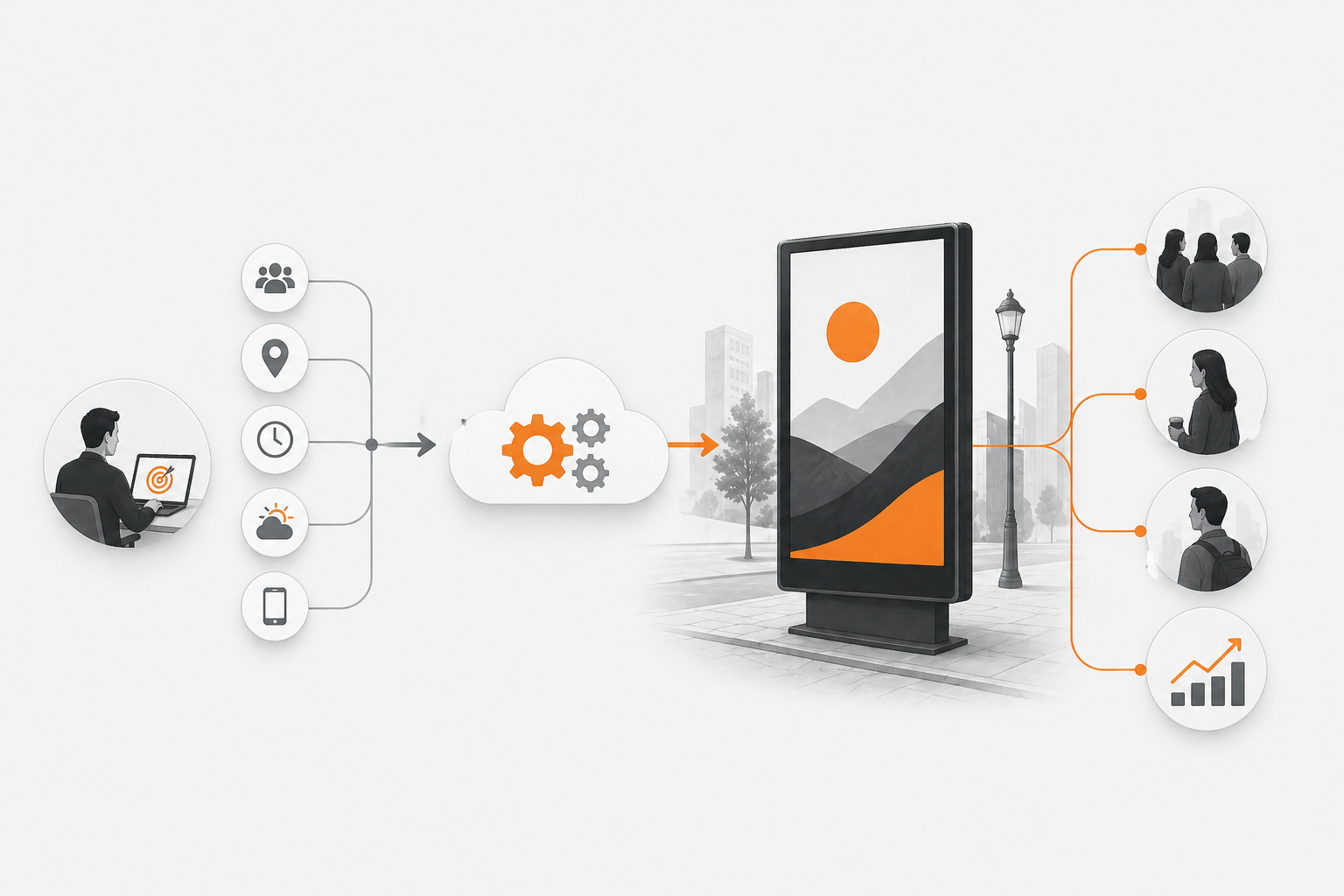
How the DOOH supply chain works
The easiest way to picture the DOOH supply chain is as a chain of custody for attention.
A screen owner has the space.
A supply-side platform makes that space available programmatically.
A demand-side platform gives buyers access to it.
And a buyer decides whether the impression, audience, or location is worth paying for.
The supply chain for programmatic DOOH follows a similar structure to digital display, with some important differences driven by the physical nature of the screens.
Advertiser → DSP → Exchange → SSP → Screen Operator → Screen
Here's how each step works:
1. Advertiser / Agency
The buyer decides to run a DOOH campaign. They may set targeting criteria: venue type (gym, transit, retail), geography, time of day, audience index, weather triggers. The creative is uploaded - usually a static image or short video.
2. Demand-Side Platform (DSP)
The DSP (demand-side platform) executes the buy. DSPs that support DOOH include The Trade Desk, DV360, Verizon Media DSP, and others. The DSP translates campaign parameters into bid requests and participates in auctions on the buyer's behalf.
3. Ad Exchange
The exchange routes bid requests from SSPs to DSPs and facilitates the auction. Some exchanges specialize in DOOH; others handle it as part of broader programmatic inventory.
4. Supply-Side Platform (SSP)
The SSP (supply-side platform) represents the screen operator's inventory. It packages available impressions - with venue data, audience data, screen specs — into bid requests formatted using OpenRTB for DOOH. SSPs also manage floor prices, deal IDs, and yield optimization. Platforms like Vistar Media, Hivestack, Broadsign, and Shinka operate at this layer.
5. Screen Operator
The screen operator owns or manages the physical screens. They connect their screens to an SSP or programmatic platform via an integration layer (often a content management system or digital signage player). When an ad is won, the creative is pushed to the screen.
6. The Screen
The screen renders the ad. In a DOOH context, a "screen" might serve dozens of viewers simultaneously - which means impression counting works differently than in digital display. DOOH impressions are typically measured in "opportunities to see" (OTS), calculated using audience data from foot traffic, mobile signals, or census models.
In simplified terms, the chain usually looks like this:
• Media owner / publisher – owns or operates the digital screens
• SSP – packages the inventory and makes it available to buyers
• DSP – lets advertisers and agencies bid on or book that inventory
• Buyer – sets targeting, budget, and campaign logic
Depending on the setup, there may also be data providers, measurement partners, verification vendors, and content management systems involved.
That is why programmatic DOOH is not just “digital billboards with automation.” It is an ecosystem.
How an auction works in DOOH
When people hear “programmatic,” they often assume every ad is bought through a real-time auction in milliseconds, like display advertising. In DOOH, that is only partly true.
Some inventory is transacted through real-time bidding, where buyers compete for available opportunities based on factors like location, time of day, audience patterns, and campaign rules.
But a lot of DOOH also happens through:
• private marketplace deals
• preferred access arrangements
• automated guaranteed campaigns
• curated programmatic channels
So the auction model can vary.
Still, the general principle is the same: the system evaluates available inventory, eligible buyers, targeting rules, and pricing logic, then decides which ad should run on which screen and when.
If traditional outdoor was like booking a poster site weeks in advance, programmatic DOOH is more like controlling digital inventory with rules, triggers, and live decisioning layered on top.
OpenRTB for DOOH
The industry uses a DOOH extension to the OpenRTB (Open Real-Time Bidding) protocol, developed and maintained by the IAB Tech Lab. The DOOH OpenRTB extension adds fields specific to out-of-home inventory:
This standardization is what makes programmatic DOOH interoperable. Before OpenRTB for DOOH, every platform had its own proprietary format. Buyers can now bid on DOOH inventory through the same pipes they use for display and video.
Targeting in Programmatic DOOH
DOOH targeting is venue-first, not cookie-based. You're not targeting an individual, you're targeting a context. Key targeting dimensions include:
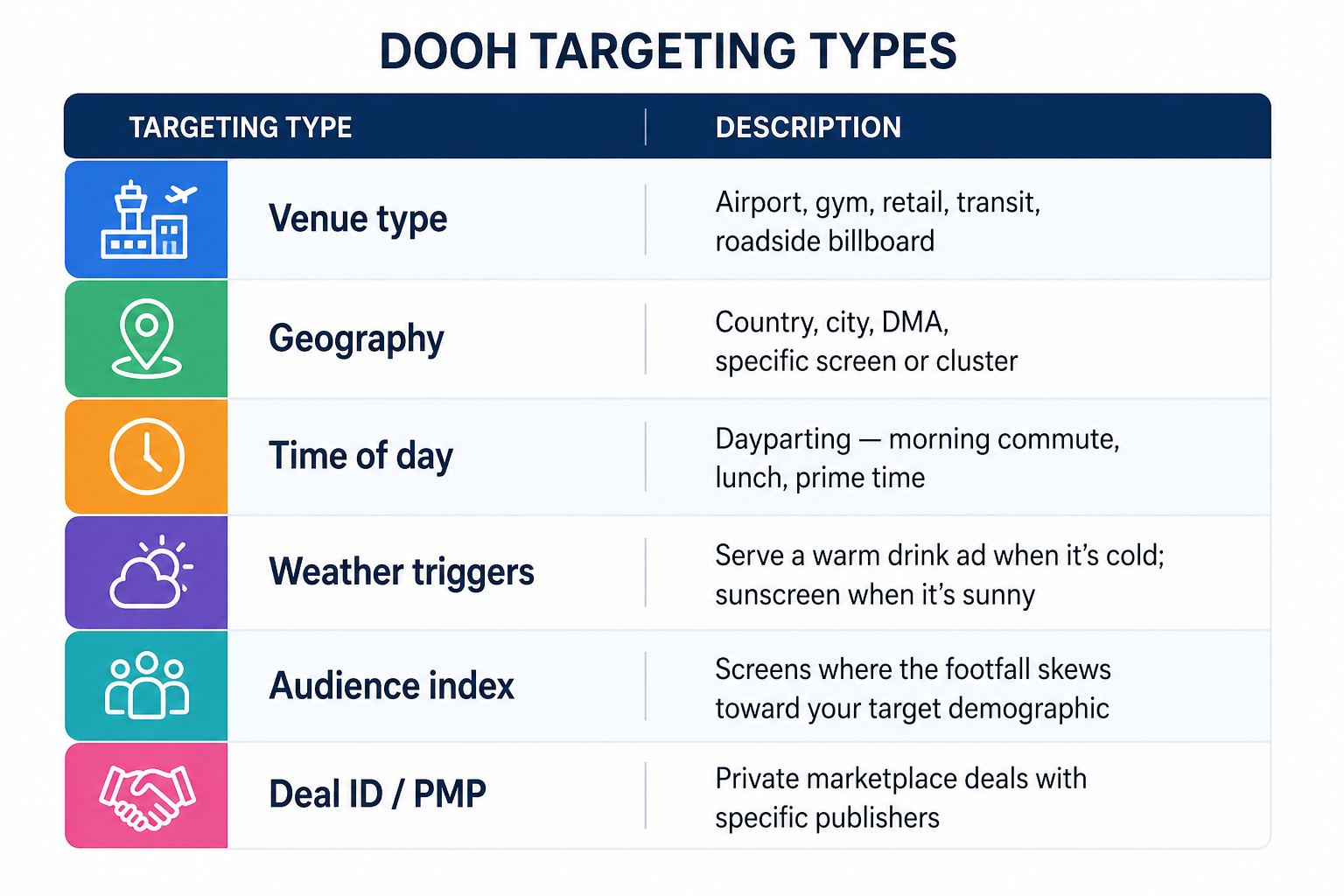
Because DOOH doesn't rely on cookies or device IDs, it's inherently privacy-safe. That's a genuine structural advantage as the industry moves away from third-party tracking.
Measurement in Programmatic DOOH
Measurement remains the toughest challenge in DOOH. Unlike digital display, there's no click, no conversion pixel, no one-to-one attribution. The industry uses several approaches:
Standards bodies like OAAA (Out of Home Advertising Association of America) and Geopath are working toward consistent measurement currencies, but the space is still maturing.
Why advertisers like programmatic DOOH
The appeal is obvious.
Programmatic DOOH gives buyers more flexibility than traditional outdoor buying. Instead of locking everything in manually and hoping conditions stay relevant, they can adjust campaigns more dynamically.
That might mean buying screens based on:
• audience movement
• time of day
• weather
• event schedules
• store proximity
• regional performance
It brings some of the responsiveness of digital media into the physical world.
Not perfectly, of course. A billboard is still a billboard. It does not behave like a mobile banner. But the planning and activation process becomes much more adaptable.
Why publishers and media owners care
For media owners, programmatic DOOH is really about making inventory easier to sell, easier to package, and easier to connect to modern demand.
It can help them:
• open inventory to more buyers
• improve fill across networks
• package inventory by audience or context
• respond faster to market demand
• reduce friction in campaign booking
But the real benefit is not “automation” for its own sake.
It is access.
If your screens are only available through slow, manual sales processes, you are limiting how many buyers can realistically work with you. Programmatic infrastructure expands that access.
What makes DOOH different from other programmatic channels
This is where it helps to avoid lazy comparisons.
DOOH is programmatic, but it is not the same as display, mobile, or CTV.
There is no click.
No one is individually logged in.
Measurement is often modelled rather than deterministic.
Creative has to work in a public, glanceable environment.
And the context of the screen matters just as much as the audience.
In other words, DOOH is not just another digital ad slot. It is location media traded with digital pipes.
That distinction matters because the best DOOH strategies are not just copies of online media buying. They are built around physical presence, visibility, and context.
Common DOOH ad formats
Programmatic DOOH can include a wide range of formats, depending on the screen environment.
Common examples include:
• large-format roadside billboards
• transit station displays
• retail and in-store screens
• elevator and office network displays
• place-based video screens
• street furniture panels
Some are static image-based. Others are full-motion video or dynamic creative units triggered by real-world conditions.
The format matters because not every screen supports the same creative execution, and not every environment delivers the same kind of attention.
The catch
Programmatic DOOH is powerful, but it is not frictionless.
The market still has challenges around:
• fragmented supply
• inconsistent measurement
• variable screen quality
• different buying standards
• transparency across the supply path
That means buyers and media owners both need to think carefully about who they work with and how inventory is packaged.
Just because a screen is available programmatically does not automatically make it premium, efficient, or well-measured.
Key Programmatic DOOH Platforms
Several platforms operate across the programmatic DOOH supply chain:
Closing thoughts
Programmatic DOOH works by connecting outdoor advertising inventory to digital buying systems.
Instead of relying only on manual planning and fixed bookings, it allows campaigns to be bought, managed, and optimized through software-driven workflows. That makes outdoor media more flexible, more accessible, and more connected to the way modern ad budgets are deployed.
The simplest way to think about it is this:
traditional OOH is booking space
programmatic DOOH is decisioning that space
The screen is still in the real world.
The transaction just got smarter.