
As programmatic advertising has become the default way inventory is bought and sold, the platforms that connect publishers to demand have taken on a more central role. Among them, the SSP acts as a key layer in shaping how inventory is exposed, valued, and ultimately transacted in the market.
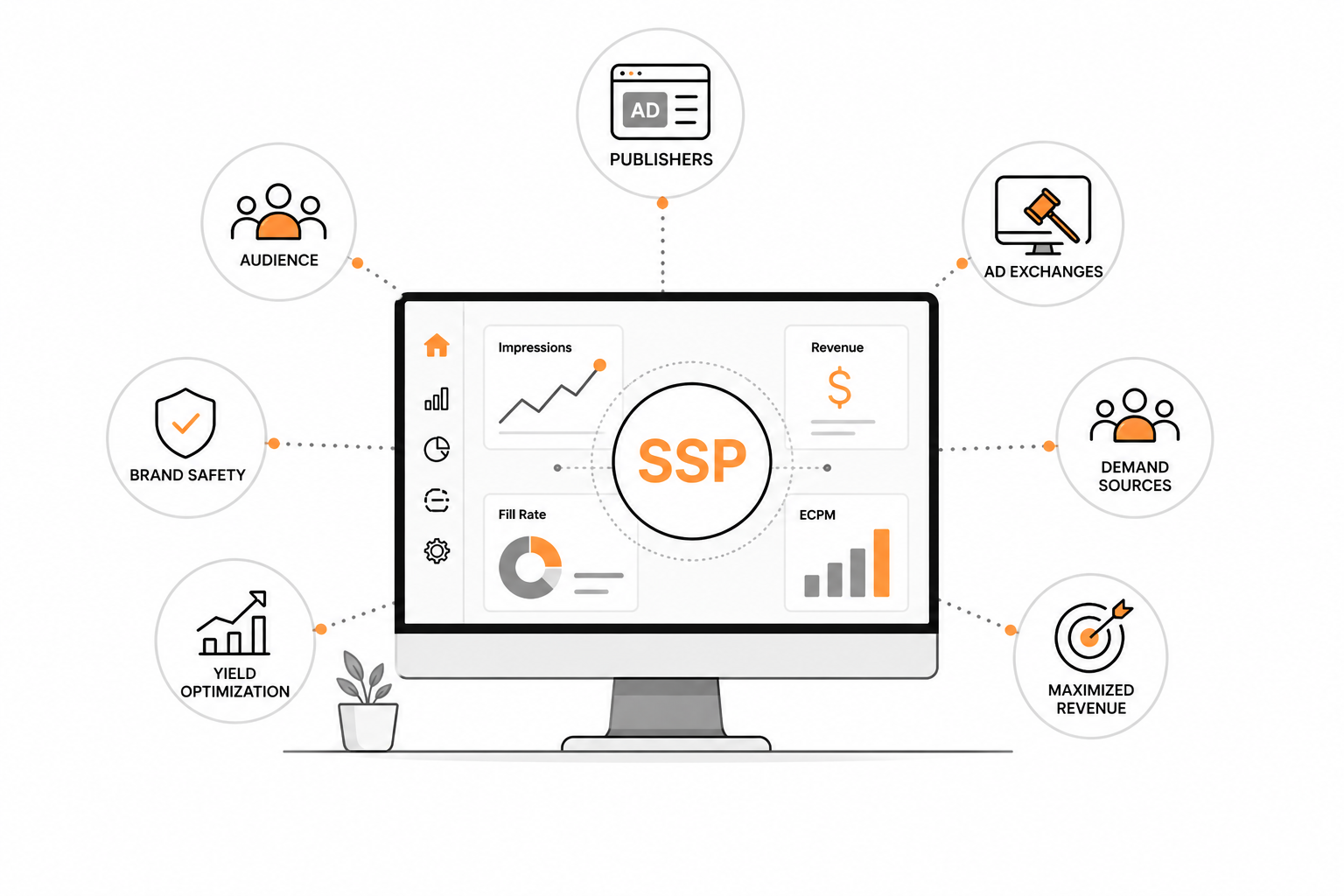
An SSP, or supply-side platform, is the technology publishers use to make their ad inventory available to advertisers programmatically.
If the DSP is the buyer’s platform, the SSP is the publisher’s side of the deal.
It helps connect available inventory to demand, run auctions, and manage how impressions are offered into the market.
What an SSP actually does
An SSP sits between the publisher and the buying ecosystem. When an impression becomes available, the SSP helps package that opportunity and expose it to advertisers through DSPs, exchanges, or direct programmatic channels.
In practical terms, it helps publishers with things like:
• accessing advertiser demand
• managing bid participation
• setting pricing logic or floor controls
• reporting on auction performance
• connecting to multiple buying platforms
The simplest analogy is this: an SSP is like the publisher’s broker. It does not create the inventory, but it helps bring the right buyers to it.
Why SSPs matter
For publishers, the SSP is one of the most important layers in the monetization stack because it affects who sees the inventory, how bids are routed, and how much transparency exists across the transaction.
That means not all SSPs are equal. Some bring stronger demand. Some offer cleaner reporting. Some create more flexibility. Others lock publishers into paths that look efficient on the surface but limit control underneath.
That is why choosing an SSP is not just about access. It is about alignment.
Key takeaway
An SSP is the platform that helps publishers sell ad inventory into the programmatic market.
It is the sell-side gateway between impression and advertiser.
Or put more simply:
if publishers have the space, the SSP helps bring in the buyers.