
As programmatic ecosystems grow more complex, visibility into how inventory and spend move through the supply chain has become increasingly important. Transparency sits at the core of that need, shaping how confidently buyers and publishers can understand, trust, and transact within the market.
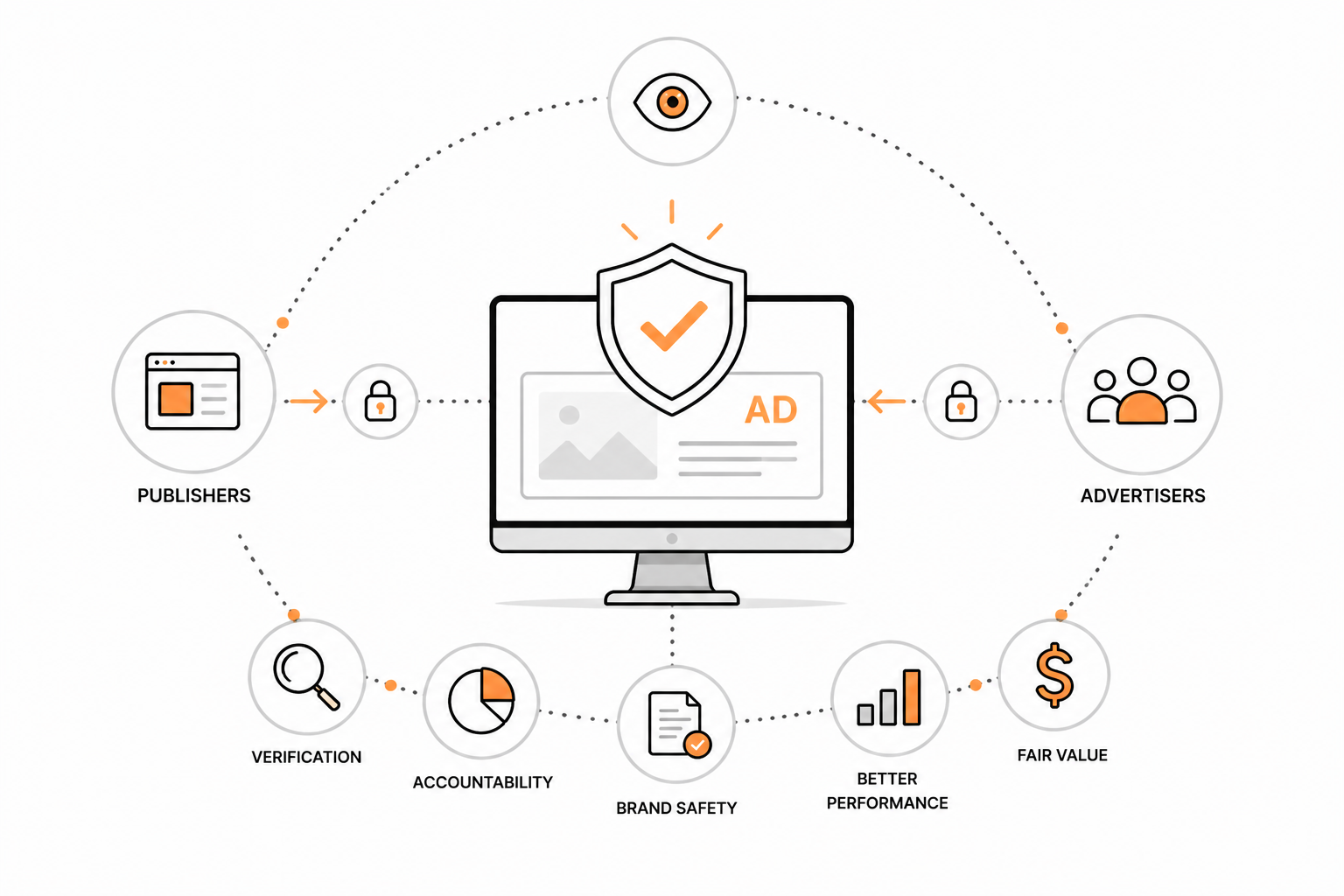
Transparency is one of those words everyone in adtech claims to support, which usually means it is worth defining properly.
In programmatic advertising, transparency is about being able to see who is involved, what they are doing, and how the money and inventory move through the chain.
Without that visibility, the market gets noisy fast. Fees become harder to track. Supply paths become harder to trust. Performance gets harder to explain.
Why transparency matters
Programmatic is full of moving parts: SSPs, DSPs, exchanges, resellers, data providers, measurement vendors, ad servers. When too much of that chain operates like a black box, both buyers and publishers lose confidence.
For buyers, weak transparency can mean paying through unnecessary intermediaries or buying inventory through unclear routes. For publishers, it can mean not knowing which partners genuinely add value and which ones simply take a cut.
The easiest analogy is this: transparency is the difference between a glass pipeline and a foggy tunnel. In one, you can see where things are going. In the other, you are mostly guessing.
What transparency looks like in practice
In real terms, transparency can include:
• clear seller relationships
• understandable auction and fee structures
• reliable reporting
• clean ads.txt and sellers.json signals
• visibility into who wins and why
• less duplication in the supply path
It does not mean every detail in the ecosystem suddenly becomes simple. But it does mean the important parts are visible enough to support trust and better decision-making.
Bottom line
Transparency matters because programmatic works best when both sides can understand the path between inventory and spend.
It is not just a brand value or industry slogan.
It is a commercial advantage.
In a crowded market, clarity is often what makes inventory easier to buy - and easier to defend.